
Professional assistance in selecting a program
Leave your phone number, we will call you back soon, answer all your questions and offer an individual program that is suitable for you and your child.


Age: 3—18 years.
Southbank International School – is an international school for children from 3 to 18 years old, from early childhood to high school. Was founded in 1979. The school has three campuses: Kensington, Hampstead and Westminster. All are located in some of central London's most attractive and inspiring areas.
Southbank — an international school offering a broad and challenging curriculum with a global outlook and an emphasis on research.
Among the students and staff of the school there are representatives of 70 nationalities from all over the world. To support Southbank's international mindset, the school offers a comprehensive language program for all students. The school offers the study of more than 20 languages in high school. Middle school students can study French and Spanish as well as their native language. Younger students learn Spanish as part of their curriculum.
Parents of students say about the school: “Southbank is different because it teaches my children how to think, not what to think. They have friends from all over the world, so the school really welcomes differences and different cultures."
Siobhan McGrath, education - University of Buckingham, Master of Education; University of Canterbury, BA in English Language and Literature.
About 210 children aged from 3 to 11 years study here. The campus is located in London's stunning Notting Hill, between the famous Portobello Road and Kensington Park Road. The main building consists of two adjacent Victorian villas.
Here are:
About 200 children aged from 3 to 11 years study here. The campus is located in Netherhall Gardens, conveniently accessible by public and private transport, and close to Hampstead Heath, one of London's largest open spaces.
Here are:
Children aged 11 to 18 study here. The campus is located at three locations in central London (Portland Place, Conway Street and Cleveland Street), all of which are just five minutes' walk from each other.
Portland Place Campus — A magnificent Grade II listed building located on Portland Place itself. This location is very close to Oxford Street and Regent's Park, as well as famous London attractions such as LondonPalladium Theater and Madame Tussauds.
On campus there are:
The Conway Street Campus is a vibrant, modernized building located close to leafy Fitzroy Square. It's also just a few minutes' walk from Warren Street and Great Portland Street tube stations, and close to a variety of museums and libraries.
On campus there are:
Newest campus on Cleveland Street– It is a state-of-the-art learning environment located very close to Great Portland Street tube station. The campus, which opened in September 2018, was created with active input from students and teachers about what it should be and how it should look and feel. This includes living moss walls that bring nature into the interior, as well as calming color schemes and artwork.
On campus there are:
International Baccalaureate(IB)
International Baccalaureate program recognized by universities around the world. 6 subjects are studied: 3 at an advanced level and 3 at a standard level. In addition to this, students write an extended essay, take a course in “Theory of Knowledge” and (practical philosophy) and the CAS course ("Creativity, Action, Service").
Find out more about IB program
The school offers many opportunities for training and competition in a wide range of sports. Students develop gymnastics skills, ball skills, and athletics techniques in throwing, running and jumping. Developing self-regulation skills also promotes emotional maturity and personal development. Students have access to a range of excellent sporting facilities in London and inspiring coaches who can improve their sporting skills.
The school is a member of the International Schools Sports Association (ISSA), so students of all ages have the opportunity to compete with other schools in London.
In high school, competitive sports are added to the program to give students the opportunity to play against teams from other local schools as well as international schools. These competitions take place all over the world — for example, football and volleyball among boys and girls were played in Barcelona, Madrid, Istanbul.
The school's boys team recently won the ISSA Varsity Tennis Tournament and the girls team finished second overall in the same competition.
A number of students performed well at the 2018 Westminster Athletics Championships; and the under-16 basketball team won the Westminster Basketball Championship.
Extracurricular activities — a great way to extend what students learn in class. Schools provide many opportunities to explore new interests and develop skills in existing hobbies. After each semester, the student has the opportunity to change his choice of extracurricular activities. This allows them to visit as many clubs as possible and communicate with a wider range of people.people.
For children from 3 to 11 years old:
For children 11-15 years old:
For children 16-18 years old:
At school they believe that studying art – it's a great way to begin to think and express themselves differently, improve their understanding of the world, and develop a stronger sense of who they are.
Visual Arts
As part of the art program, the school organizes excursions for students to London and beyond. This provides a fantastic opportunity to see performances, art, films and concerts from world-class artists in some of the UK's best venues.
While studying at Southbank, students can take part in a variety of extra-curricular arts activities. These include: animation, concert group, theater group, film club, painting and sculpture, photography, pottery, script writing, string orchestra, theater production and much more.
Younger students can study architecture, ceramics, collage, costume design, drawing, graphic design, film, illustration, painting, photography, printmaking, sculpture, textiles and woodwork. The school organizes trips to art galleries, museums, theaters and cinemas to help introduce visual arts from around the world.
In secondary school, students develop skills in drawing, painting, sculpture, photography and printmaking. Through their visual arts classes, they learn about important artists, works of art, and techniques. The purpose of the classes – Give students the knowledge and skills they need to solve problems creatively, critique the work of others, and confidently express their feelings, experiences, and ideas.
High school students develop their personal visual language in two- and three-dimensional environments throughout the visual arts course. This involves developing critical thinking to develop a fresh perspective on the fundamentals of art and design. Students then reach a point where they think and behave like practicing artists and designers.
Music and performing arts
In the lower grades (from 3 to 11 years old), classes introduce children to music from different times and places. All students aged five and over learn to play the violin, viola or cello as part of the music program. When they reach grades 4 and 5, they also have the opportunity to learn to play the guitar or flute. Starting in kindergarten, all junior students take part in a recital and the annual school concert. Junior schoolchildren regularly attend large concert halls and theaters in London, take part in live performances, and also improve their performance skills.
In grades 6-8, students study theater, fine arts and music separately for one semester a year. In Years 9 and 10, they study design throughout the year and choose to study one of the subjects: theatre, art or music, all of which can continue to be studied in senior school. Each art subject develops critical and creative skills in a variety of contexts. The theater course examines modern theater and the history of theater. The course helps you develop your own theatrical and presentation skills, teaching you the design and construction of set, costume and props, as well as stage lighting and sound production.
During the two-year IB program, students take standard or advanced courses in film, theater, visual arts, or music.
Media
The course allows you to explore, experiment and create creative products in various media. This includes photography, animation, video production, interactive media, radio and print. Students explore different genres and then create their own projects, working individually or collaboratively in small groups. In addition to developing technical skills, the course aims to encourage creativity, teamwork and media literacy.
Cinema
The course dives into the practical, theoretical and conceptual aspects of filmmaking. This includes learning how to tell a story visually, write a script and plan a production schedule, use lighting and recording equipment, edit and create the final cut. Course – This is excellent preparation for any student who wants to study film theory, film production or any art or communications course at university or wants to work in the film industry.
£13,355 - £16,033 per semester (depending on age).
There are 3 semesters in the academic year.
Included in price
Additional charge


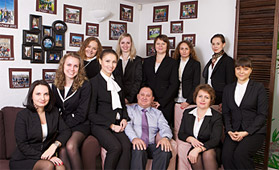
Expert assistance in selecting the right schools for your child in the UK, Switzerland, which have been our main specialization since 1996.
We also help you enter schools where teaching is conducted in English: in the United Arab Emirates, Spain, Austria, Thailand, Canada, and France.
Full support in the admission procedure: preparation for an interview, visits to selected schools accompanied by a Paradise employee.
Assistance in applying to universities in the UK, Switzerland, Canada: writing motivation letters, creating a package of documents, creating the right case for applying for a visa (to avoid rejection).
Leave your phone number, we will call you back soon, answer all your questions and offer an individual program that is suitable for you and your child.