
Professional assistance in selecting a program
Leave your phone number, we will call you back soon, answer all your questions and offer an individual program that is suitable for you and your child.


Plymouth College is a boarding school for girls and boys, founded in 1877.
The school is located in the south-west of England, in the coastal city of Plymouth (Plymouth) in the county Devon (Devon). The nearest Exeter Airport from the school can be reached in 15 minutes. The distance to London is 340 kilometres, which is about 4 hours by car, or an hour by plane.
Plymouth College is located in Ford Park, north of Plymouth city centre. The College has a Business School, which is a national leader in financial literacy and one of the best business schools in England.
Plymouth College is a very busy and vibrant school where it’s hard not to feel inspired, involved and determined. The school is known for educating the best athletes, including athletes in swimming, diving and fencers.
Plymouth College is academically strong, but in addition to subjects, it offers a wide balanced curriculum of additional opportunities to participate in an impressive range of sports events, outdoor events, art, music, drama and other events, including trips to the theatre, the Eden project, ancient castles, day trips to France and London, trips abroad to Ireland and Greece, as well as trips to the beaches of South Devon and Dartmoor. Everyone can find something to their liking and achieve high results.
The school has about 500 students.
Peter Watts, Education - University of Southampton, Bachelor of Science - BS, Physics..
Full-board students can use the school’s sports facilities in the evenings and at weekends; possibly swim in the pool; play badminton in the gym; play rounders on the school field or soccer. There is enough infrastructure for the children to be busy and engage in active sports.
Sixth Formers has its own space, as well as separate music practice and computer rooms.
Meals are provided in the school cafeteria; although each house has a kitchen where you can prepare drinks and snacks.
The school has its own laundry room, which is open on weekdays.
Key Stage (Year 7-9)
At the beginning of the 7th year of study (11 years), there are no settings and basic indicators. This gives all students the opportunity to adapt to the school both academically and socially. At the 8th and 9th year of study (12-13 years), there are wide opportunities in the field of mathematics, natural sciences and English. This helps students progress at a pace appropriate to their abilities in these subjects. Class sizes are small (an average of 15 students per class) so that all students can receive frequent, focused interaction with their teachers.
GCSE (certificate of secondary education)
Thematic election of subjects for the GCSE and IGCSE begins in the 10th year (14 years) and lasts until 11 years (15 years). There are 4 compulsory subjects (English, mathematics, science and modern foreign languages) and 3 subjects to choose from (art, business, drama, music, geography, history, etc.). There is also a growing number of GCSE subjects that can be studied after school during classes, including philosophy, Greek, computer literacy, film art and additional languages. Class sizes are small, with an average of 12 students per class, which allows all students to receive individual support.
The school has a one-year program for international students before entering the Sixth Form, for students of 11th year of preparation for preparing for A-Level or Sport Baccalaureate courses a year later. This program allows students to complete a GCSE or AS qualification in one year.
What is the difference between IGCSE and GCSE programmes?
A-Level
Class sizes are even smaller than on the GCSE, with an average of less than 9 students per class, which allows students to receive significant teacher support. Students will study 3 subjects in two years with all formal exams at the end of the course. Most international students also follow an Advanced Learning English (EAL) course leading to the IELTS qualification.
Find out more about A-level program
The Sport Baccalaureate
The Sport Baccalaureate is a complete two year course built around a central qualification of the Edexcel BTEC Level 3 Extended Diploma in Sport (Outdoor Adventure). The BTEC Extended Diploma is a long-standing British qualification and is the equivalent of three full A Levels. The Sports Baccalaureate is both a practical and academic qualification with assessment by way of a portfolio, assignment and presentation rather than through examinations. Students should ideally have 5 GCSE passes at C grade or above, including English and Maths but those who do not quite meet this level may still be accepted. During the two years, pupils will cover topics such as:
Upon completion of the course, you will have the same options for further study as traditional A-Level students. Over 95% of Universities accept UCAS points from BTEC programmes and in fact many universities prefer those who have studied a BTEC, as you are already an independent learner. Studying the Sports Baccalaureate course does not limit students to a sport-based university course.
Plymouth College students who have completed the Sports Baccalaureate have gone on to study at many prestigious universities including those in the Russell Group. The pass rate of the Sports Baccalaureate course has consistently been 100%, with many pupils achieving triple distinction.
The main house of the school is College-House: it consists of a number of Victorian villas belonging to two satellite houses - Thompson and The Heven. In the main College-House, the houses of boys and girls are separated by the Housemaster.
In the bedrooms, each full-board student has their own space, with storage space, a desk, Internet access and, of course, a comfortable bed. Bathrooms are located in all guest houses.
The sport is given special attention and it is at a decent level. Plymouth College plays in league and national school competitions in Plymouth, both as junior and high school students.
The school offers the following sports: cricket, basketball, netball, badminton, golf, athletics, rugby, rounders, diving, fencing, swimming, horse riding, hockey for girls, soccer, cross country
70 schoolchildren swim in the Plymouth swimming club for professional athletes, from 13 to 25 hours a week, depending on age, level and ambition. Training starts at 4:00 in the morning. There are many bronze, silver and gold medallists of their countries and Great Britain. The program is built for each individually, and study never suffers! Nutrition is also balanced according to the needs of each athlete. There is a physiotherapist and a nutritionist. The guys go out to compete for the UK and for their own countries, this is provided for by the program.
After completing homework, there are a number of evening activities for students, such as: badminton in the gym; swimming in the pool; playing on Wii in the common room; talking over coffee and cookies in the kitchen or playing music.
On weekends, activities include bowling, ice skating, movie theatre trips, paintball, boat trips, golf, swamp walks, surfing and skiing on a dry ski slope. This level of communication in an adventurous environment has a beneficial effect on other areas. Sometimes there is a quieter weekend to ensure complete relaxation and a change of pace.
£14,677 - £17,202 per semester.
There are 3 semesters in the academic year.
Included in cost
Extra paid

Natalia Strein
Founder of Paradise
I dream of swimming across the lake Sooner or later I will do it The pool and I meet often So a trip to Plymouth College on the seaside - England's most swimmable school - was anticipated with excitement, as if I were going to a qualifier Of course, I'm not going to be accepted But what a handsome coach Black-eyed Frenchman Robin smiles, and that's it, I'm already swimming
What can't be said about the school No charming architecture, no rich interiors to attract the eye. BUT TALENTED CHILDREN SWIMMERS CAN GET UP TO 50% DISCOUNT FOR TRAINING HERE. AND EVEN HIGHER!!!
The boys' house is cosy, with new furniture and fresh renovations. It smells nice NOT socks Wonders
There are 120 boys and girls living in the boarding house One Russian from London and one from Monaco. Both from wealthy families, this provincial school was chosen for its speciality: the swimming programme
Plymouth College is one of the best schools in the UK and the world for training young athletes 70 schoolboy swimmers train at Plymouth Swimming Club for professional athletes, from 13 to 25 hours a week, depending on age, level and ambition There are many bronze, silver and gold medallists from their home countries and the UK
The programme is tailor-made for each individual and learning never suffers Nutrition too is balanced according to each athlete's needs There is a physiotherapist and a nutritionist available
The boys travel to compete for the UK and for their own countries, this is part of the programme On arrival, the local coach liaises with the coach the child has had at home and discusses the training plan and technique
Morning training is at 4.45 a.m. Training lasts 41 weeks of the year Swimmers have a 3 week summer holiday
Parents of gifted swimmers If you want your child to reach the international level, but at the same time to get a full education and if you want to enter a university, you can come here.
YOU CAN COME FOR A 1 WEEK TRIAL Or for 2-6 weeks to assess the situation and make a decision.
Talented swimmers receive a scholarship (discount) from 5% to 50% or even higher for their training


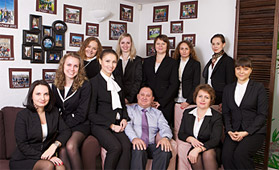
Expert assistance in selecting the right schools for your child in the UK, Switzerland, which have been our main specialization since 1996.
We also help you enter schools where teaching is conducted in English: in the United Arab Emirates, Spain, Austria, Thailand, Canada, and France.
Full support in the admission procedure: preparation for an interview, visits to selected schools accompanied by a Paradise employee.
Assistance in applying to universities in the UK, Switzerland, Canada: writing motivation letters, creating a package of documents, creating the right case for applying for a visa (to avoid rejection).
Leave your phone number, we will call you back soon, answer all your questions and offer an individual program that is suitable for you and your child.