
Professional assistance in selecting a program
Leave your phone number, we will call you back soon, answer all your questions and offer an individual program that is suitable for you and your child.


Sidcot School was founded in 1699 and is one of the oldest and most prestigious private schools in the UK. The school is located in the picturesque countryside on the outskirts of the village of Winscombe and is 30 minutes by car from the historic city of Bristol and 2 hours from London.
About 650 students’ study at the school, mostly British and only a small percentage are foreigners. Foreign students show as good results as their British classmates. Graduates successfully enter selected universities around the world, the most prestigious and ranking.
James Jones, Education - The University of Sheffield, Bachelor of Arts - BA, History and Master of Arts - MA, History.
The school has a 25-meter heated pool, gym, gym, tennis courts, rugby and football fields, all-season sports fields. Here, great equipment for practicing art: spacious and bright studios, 3D studios for practicing ceramics and sculpture, special equipment for photography, film production and website design, including a traditional photo laboratory. The art department has three furnaces for firing ceramics, an oven for firing glass, several printing presses and a workshop for gypsum moulding.
Sidcot School has a great riding centre with a stable with its own horses, a pony club, outdoor all-weather arenas and a cross-country horse-riding training route. Pupils can bring their own horses (even from abroad) to keep them in the stable, providing full feeding, care and training. Schoolchildren have the opportunity not only to attend riding lessons, but also to learn how to care for horses and get Horse Owner's Certificates.
GCSE
A two-year program for obtaining a certificate of general secondary education. Required to study 6 subjects, 4 subjects are studied by choice.
What is the difference between IGCSE and GCSE programmes?
A-level
A two-year university preparatory program. Students choose 4 or 5 subjects for in-depth study.
Find out more about A-level program
International Baccalaureate Diploma (IB)
A program recognized by universities around the world. 6 subjects are studied: 3 at the advanced level and 3 at the standard level. In addition to this, students write an extended essay, take the course “Theory of Knowledge” (practical philosophy) and the course CAS (“Creativity, Activity and Mutual Assistance”).
Find out more about IB program
BTEC
An alternative to the A-level program: a pre-university training course with maximum emphasis on the development of practical skills, the application of theoretical knowledge in real life. You can get a BTEC qualification in the following specialties: business sciences, sports.
Find out more about BTEC program
Residence, younger students live in double and triple rooms. High school students live in single and double rooms. Some students prefer to do homework in their rooms, while others use the library for this. Each house has a comfortable common room with a TV, DVD and game console, WIFI and a small kitchen for students.
Sports at school: athletics, basketball, cricket, cross-country running, horse riding, fencing, soccer, golf, hockey, karting, netball, rounders, rugby, skiing, swimming, tennis. Throughout the year, children regularly participate in matches against local schools, showing excellent athletic performance.
Sidcot Centre for the Creative Arts combines traditional genres with the latest technology and modern means of fine art, music, drama, sculpture, photography and digital media. The music school has a special hall for performances, rehearsal rooms, a recording studio and equipment for practicing music technology. The theatre department provides opportunities for theatrical art classes, the creation of radio productions or films.
The school offers more than 100 additional classes on interests: from archery and trampoline ta math club and hiking. The school guarantees that students have every opportunity to try new classes, as well as develop existing interests. Examples of extracurricular activities: the creation of digital media projects, debates, jewellery manufacturing, television production, a culinary club, a choir, a needlework club, a mathematics club, and much more.
The school organizes excursions for students, visits to galleries and museums, international exchange programs, music tours, lectures.
£15,052 - £19,152 per semester (depending on age).
There are 3 semesters in the school year.
Included in cost
Extra paid
 Natasha Strein
Founder of ‘’Paradise’’
Sidcote School in a village near Bristol, England, is like a lush, blooming garden. The eye rests, the soul rejoices: it seems like I am on holiday in a spa hotel. They say that in beauty a person becomes kinder and more decent. Beauty will save the world!
Student Mark, 13, when I asked him “why he decided to come here” said that his father explained to him “the value of languages and gaining independence”.
“I like the teaching, the approach and the daily routine. The schedule is very important to me: I like PREDICTABILITY and a clear plan. In Moscow there was no such punctuality: we were not warned about upcoming events as much in advance as here. There was spontaneity there, and for me that is stressful.”
“I like that when you walk around the school, everyone is SMILE. At least all the adults. The children are also friendly. There was nothing like that in Moscow.”
"At 9 pm we hand in our PHONES, so we can get some sleep," laughs Mark. The English know that social networks affect the same part of the brain as cocaine, it is difficult to tear yourself away, so they help children free themselves from gadgets.
Shares observations: "In Russia, everyone gets A's in drawing, and in music too: there we just sing. In England, there is a serious and individual approach. Here we try different instruments, we are divided into levels so that no one gets bored. We learn basic things, improve our erudition. We even compose and record music ourselves!
In drawing, we go through different techniques, work with different paints: oil, gouache, pastel, watercolor, and also pencil. We are encouraged to be creative: combine different materials and styles. The main thing is to try as many new things as possible. Recently, we even cut out our own jackets at "textiles".
Sidcote School
We are learning to take photos, combine photos and videos in a special program. Now we are making ceramic dishes. Each cycle has a theme. After all, creativity should be meaningful.
We are currently working on the theme "CONFLICT. WORLD WITHOUT VIOLENCE". The school preaches the traditions of Quakerism - solving problems without aggression. We will try to speak out about the problems of the world through creativity, draw attention to problems, be it on canvas or in ceramics. Creativity here is meaningful: we must write in a diary how this or that idea came to us, what technique we decided to use and which we rejected and why. What our creation should tell people, what is the meaning of it."
Mark is in the 9th grade. A very good choice: it is at the age of 13 that British children enter senior school: many newcomers, friendship is just beginning.
But the most important thing is that this year is of a PREPARATORY and exploratory nature. Children study many sciences and arts in order to try EVERYTHING to the MAXIMUM and in the next, 10th grade, at the age of 14, already make their own choice of subjects.
The child is no longer small, and the terrible ghost of adolescence looms. Energy is rushing, protest is growing... The school has created all the conditions for their splash.
Therefore, if you have not decided to send your child to 10 (ideally), then 13 years is the BEST AGE to send.
The sword of Damocles of state exams does not hang yet, and you can calmly bring English to perfection - Mark studies every week for several hours. And try out for "taste" many types of sports and clubs of interest: from debates to cooking, from robotics to flying a plane...
We get ANGRY with children if they start an art studio or dance and quit. They haven't even had time to get on a snowboard - they're no longer interested, give them hip-hop... But children will be able to understand what they like ONLY BY TRYING AND THROWING AWAY, until they find something that they really like. And according to their abilities.
It's hard for a family to satisfy this: search: the child needs to be transported, the lifestyle needs to be changed. In a boarding school, all these opportunities - up to 40 sports and up to 150 clubs - are on one territory. And if something is missing, the child just needs to show initiative - they will organize it or take him.
When I meet children like Mark, I'm proud. Proud as if I were their mother, and I imagine how a warm, huge wave of happiness covers the parents from the realization that they did their job perfectly.
After all, school only polishes and decorates the finished product.
Recently, the mother of a boy with bad behavior challenged me: "Let's see how the school will show its professionalism, how it will interest my son. It's easy with convenient children!"
However, British schools are NOT CORRECTIONAL INSTITUTIONS, as is sometimes mistakenly believed. They are for children who want to learn and get the most out of life.
A child will succeed in a British boarding school only if the family's values correspond to the school's.


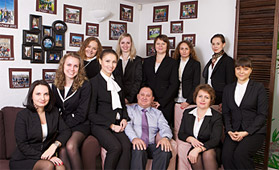
Expert assistance in selecting the right schools for your child in the UK, Switzerland, which have been our main specialization since 1996.
We also help you enter schools where teaching is conducted in English: in the United Arab Emirates, Spain, Austria, Thailand, Canada, and France.
Full support in the admission procedure: preparation for an interview, visits to selected schools accompanied by a Paradise employee.
Assistance in applying to universities in the UK, Switzerland, Canada: writing motivation letters, creating a package of documents, creating the right case for applying for a visa (to avoid rejection).
Leave your phone number, we will call you back soon, answer all your questions and offer an individual program that is suitable for you and your child.