Professional assistance in selecting a program
Leave your phone number, we will call you back soon, answer all your questions and offer an individual program that is suitable for you and your child.
The International Baccalaureate (IB) Diploma Programme (DP) is an educational programme taught in one of three languages (English, French or Spanish). This programme prepares graduates for admission to the best universities in the world.
IB programme is taught in schools in 125 countries. Most schools teaching the DP (Diploma) programme are state-subsidised schools. The International Baccalaureate Organization (IBO) was founded in 1968 in Geneva with the support of UNESCO. It is a non-profit foundation that does not belong to any particular country. Currently, IBO offers three options for educational academic programmes.
The International Baccalaureate is a recognized leader in international educational programmes. It is represented by three agreed programmes:
The Diploma Programme includes:
Each student is recommended to spend 150 hours on developing creative skills, physical fitness (sports) and charitable work (environmental protection, charitable assistance).
Each subject is assessed on a seven-point scale, with 7 being the highest score. An additional three points can be obtained for an excellent diploma thesis (essay) and for a project on Theory of Knowledge.
45 points is the maximum possible score that a student can achieve in the Diploma program.
To receive the International Baccalaureate Diploma, a student must earn a minimum of 24 points.
However, there are some points due to which a student may be refused a Diploma, despite the points they have earned. This is non-participation in the creative, sports and spiritual development (CAS) program, copying other people's ideas, and an unfinished thesis.
On the other hand, there are certain conditions that allow you to receive a Diploma, despite possible failures in any disciplines: successfully passing exams in your native and one foreign language, as well as fulfilling other additional requirements of the program, gives the candidate the right to receive a Diploma of Bilingual Education.
Each student chooses to study 6 subjects (one subject from each of the following groups 1-5), and also additionally takes a sixth subject from groups 1, 2, 3, 4 or 6.
He is required to study at least 3 subjects in an advanced program (240 hours of classes in each subject), the remaining 3 subjects will be studied by him within the framework of the secondary school standard (150 hours in each subject). It is not possible to study more than 5 subjects in the advanced program without special permission from IB coordinator of the school.
Group 1: Languages: Usually the student's native language (80 different languages to choose from).
Group 2: Second language: A foreign language in addition to the first language studied.
Group 3: People and society: humanities such as: philosophy, economics, business and management, psychology, anthropology, law, peaceful conflict management, information technology, geography, history.
Group 4: Experimental sciences: physics, chemistry, biology, ecology, technology on environmental protection.
Group 5: Mathematics: standard mathematics, intermediate mathematics, advanced mathematics, higher mathematics. Computer technologies and programming can only be an additional sixth subject, but not part of the mathematics course.
Group 6: Creativity and additional courses: painting, graphics, ceramics, music, choreography, drama. The proposed subjects of this group can be replaced by the student with any other subject from Groups 2,3,4 or with computer technologies from Group 5.
Other compulsory elements of IB program
The student must write a thesis consisting of 4000 words (10-11 pages of A4 text) on any subject studied (not necessarily an exam). Each course has special explanations, following which the student will be able to correctly organize and design his first scientific work. The topic for the work can be anything, but forcing to research and study the subject of the topic. The thesis is written under the guidance of a teacher, who is simultaneously developing the same topic, giving written advice to the student.
CAS is an abbreviation of the English words: Creativity, Action, Service.
This block of the program is optional. It invites students to take part in socially significant events, participate in sports competitions, and engage in creative work. This section of the program is aimed at motivating students to go beyond the school academic program, to feel their significance and importance in the world, sharing their skills with others. Each student wishing to receive a Diploma must spend 150 hours during the course on charitable, sports and creative activities. Of course, a student can devote much more time to sports, creativity or charitable activities, but to receive a Diploma it is important that he or she engages in creativity, sports and social work for at least 50 hours for each type of activity. The hours are documented in official school registers, which are submitted annually in January to the head office of the International Baccalaureate Organization. A diploma is issued if the required course is fully completed.
Each student must successfully complete the Theory of Knowledge course. A minimum of 100 class hours are allocated for this subject. The purpose of this course is to develop students' critical thinking, logic and independent learning skills. The condition for successfully passing this subject is writing an essay of 1200-1600 words (4-5 pages of printed A4 text) on one of the proposed topics of choice and presenting it.
All knowledge on subjects is assessed in points assigned by the school itself and by grades assigned by independent experts of the organization, as well as by the results of exams held in May. Each exam typically consists of two or three sets of tests. All sets of tests are taken on the same day. For example, a chemistry exam might consist of Test 1 with questions and multiple choice answers. Test 2 will have questions that require a written, reasoned answer. Test 3 might require the student to give an in-depth answer to one specific question.
Retaking the exam is only possible the following year. A candidate has the right to retake the exam three times.
Each test option takes from 45 minutes to 3 hours, but the exam usually lasts from one to two hours.
Since a large number of different subjects are usually tested during the exam month, students often have to write several different tests in one day. The test results are confirmed by an independent expert from the International Baccalaureate Organization.
The forms of internal testing and examinations conducted by the school itself (IA) are different: oral presentations, practical work, written work, homework. The school's grades determine 20-50% of the final score that the student receives in the subject being studied.
The grades given by the school and experts for the examination papers are processed and analyzed. The overall performance indicators of schools around the world determine the minimum passing score for a student to receive a Diploma in each given year.
To receive IB Diploma, the following requirements must be met:
In Canada and the United States, some IB Diploma programs are recognized as first-year university or college level. Universities and colleges may allow a student to enter the second year,depending on the final grades in his IB Diploma. Thus, IB Diploma is equivalent to the Advanced Profile Programme.
In England, most universities, including Oxford and Cambridge, accept IB Diploma as an alternative to the English A-levels. In 2008, UCAS created a table for IB Diploma scores, which indicates the minimum scores for admission to each university in the country.
Other countries, such as Germany, have set specific requirements for applicants with an IB Diploma:
Applicants must retake the following subjects in Germany:
Some universities, however, prefer to accept students with IB Diplomas obtained by them in the country of their study. The list of German universities accepting applicants with IB Diplomas without retaking exams is always updated on the official IBO website.
In Australia, all universities accept IB Diploma. Students with high scores in advanced subjects can ask for distance learning credits in their first year of study at the university.
Russia accepts IB Diploma in most universities, including Moscow State University, MGIMO, and Plekhanov Russian Economic University, but these universities require very high final scores in the Diploma. For example, to enroll in the Faculty of Economics at Moscow State University, an applicant must have 36 points in IB Diploma, including an exam score of at least 6 in each subject studied in depth.
In France, IB Diploma is an alternative diploma for an applicant applying to any university in the country.
In Hong Kong, applicants with IB Diploma can enroll in universities in the country as international students.
The National University of Singapore recognizes IB Diploma as a worthy certificate for applying to the first year of university.


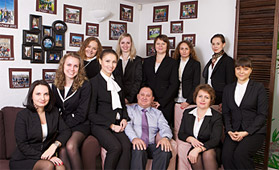
Expert assistance in selecting the right schools for your child in the UK, Switzerland, which have been our main specialization since 1996.
We also help you enter schools where teaching is conducted in English: in the United Arab Emirates, Spain, Austria, Thailand, Canada, and France.
Full support in the admission procedure: preparation for an interview, visits to selected schools accompanied by a Paradise employee.
Assistance in applying to universities in the UK, Switzerland, Canada: writing motivation letters, creating a package of documents, creating the right case for applying for a visa (to avoid rejection).
Leave your phone number, we will call you back soon, answer all your questions and offer an individual program that is suitable for you and your child.