Professional assistance in selecting a program
Leave your phone number, we will call you back soon, answer all your questions and offer an individual program that is suitable for you and your child.
In 1117, Oxford University had already begun teaching students, and, according to history, after the clash of professors and students with the inhabitants of Oxford in 1209, some scholars fled north, where they founded the University of Cambridge. In the second half of the 19th century, University College London was opened in the capital, and then King's College - two institutions that now make up the University of London. Also in the early 19th century, Durham University was founded. In addition, at the end of the century, the so-called "redbrick universities" were opened in large cities - educational institutions in which they studied applied or engineering disciplines. These are the University of Birmingham, the University of Bristol, the University of Liverpool, the Victorian Institute in Manchester, the University of Leeds and the University of Sheffield.
Particularly noteworthy is the Russell Group, or Russell Group - an elite interaction group of 24 of the best universities in Great Britain, established in 1924. Collectively, this group accounts for 2/3 of all research grants and research contract funding in the UK and 56% of all doctoral degrees awarded in the UK. This group is often regarded as the British equivalent of the US Ivy League. The Russell Group is made up of the largest and best universities in the UK. 18 of the current 20 members of the group are among the top twenty in terms of research funding. People say that a graduate will be able to find his first good job only with a diploma from the Russell Group.
Recall that Russian high school diplomas are not listed in the UK. Therefore, applicants from Russia can enter the first year of undergraduate studies either by completing a two-year A-Levels program, or one-year Foundation preparatory courses, or by receiving an international baccalaureate (IB) diploma. We offer a range of such programs both at international colleges and in UK and Swiss boarding schools.
All these programs for foreigners are paid and require excellent knowledge of the English language, confirmed by the corresponding certificate (IELTS). Usually a level of at least 7.0 is required.
The company "Paradise" helps students to choose English language courses with the subsequent passing of the IELTS exam, for the period that each individual needs to achieve the required level.
Admission to British universities is carried out through the centralized British system UCAS. The deadline for applications is October 15th, sometimes the previous year of the start of study. If the applicant is attending a boarding school, he already has a set of marks obtained in the preliminary exams in the summer, and the school sends them to the universities of the student's choice. Therefore, the applicant, having passed the final exams, according to their results, knows which of the selected universities he entered.
You can apply for admission to several universities, in this case, for each of them you need to prepare your own package of documents:
After processing the information by the UCAS system, the applicant receives a positive or negative answer. Each university evaluates the applicant and his ability according to its own principles. For example, some universities do not consider candidates with grades below "A" ("excellent"), some emphasize extracurricular achievements, allowing grades "B" ("good").
However, if all universities responded with a refusal, there is no need to despair: after the universities accept candidates who have passed the main competition, they post the so-called "Clearing". These are the lists of vacancies left after the main admission. In this case, the student can independently call the admissions office and clarify the possibility of enrollment.
Since 1944, students who have reached the age of 16, after completing the compulsory education cycle, can either leave school and start working, or continue their education in order to enter the university. Those wishing to enter the university are offered a two-year A-levels course. After the first year of study, AS exams are taken, and after the second - A2-levels. The first year of study involves the compulsory study of 4-5 subjects, the second 3-4. There are no compulsory subjects required for delivery - the student selects all subjects individually from 15-20 offered by the school, thereby determining his specialization, which will be devoted to the next 3-5 years of study at the university. Most often, foreign students who come to study in the UK begin their education with A-levels.
After completing a two-year A-levels course, students who have reached the age of 18 can receive either vocational or higher education. Professional education (Further education - FE) includes vocational training courses and some courses for higher education (bachelor's degrees). The term vocational education is used to refer to courses for those who left school at the age of 16. There are over 600 public and private continuing education colleges in the UK. These institutions offer a variety of study programs, including English language courses, General Certificate of Secondary Education preparation programs and A-levels, professional courses.
Higher education (HE) includes bachelor's degree programs, postgraduate programs (master's degree, doctoral degree) and MBA. The term "higher education" refers to study at universities, colleges and institutes that offer an academic or doctoral degree. It is very common for our clients to choose universities in the UK for their bachelor's degrees, and we also help our adult clients achieve higher degrees.
After graduating from high school in the Russian Federation, our applicants cannot immediately enter British universities. The graduate is recommended to choose one of the programs. The first is a two-year A-level, where he will study with British students, designed for ambitious young people wishing to enroll in Oxford or Russell Group universities.
Cardiff Sixth Form College, D'Overbroeck's College, Cambridge Tutors College are the best colleges for preparing foreigners for the university, with which we have been cooperating for several years.
A very popular version of the one-year Foundation program, which is designed specifically for foreign graduates. Since 1996, we regularly send our clients to study on this program in the UK:
This program guarantees the student's admission (subject to the successful completion of the program) to one of the partner universities of the college that conducts the Foundation program.
However, it is worth realizing that most of them will be mid-range universities. The program is good for Russian applicants not only because it brings up the level of knowledge of the English language necessary for admission to a university, but also introduces the educational system of Great Britain and the system of assessing students' knowledge in general.
It helps them to adapt, and gives parents confidence that their children will continue to study in Britain. It is worth noting that there are Foundation programs at specific universities for those students who know exactly where they want to get education.
In order to become a student of the Foundation program, you must pass one of the tests in English (IELTS at 5.5 points, TOEFL at 500 points). Most of the preparatory course (almost a third of all classes) is devoted to English classes. In addition, students study specialized subjects that they need in the future upon admission.
Higher education programs in the UK are similar to those in Russia:
In the UK, the first higher education is called undergraduate. The term of study for most British bachelor's programs is 3 years, since by this time students from UK universities have already received basic knowledge in schools and colleges on A-levels or on the Foundation program.
In British universities, master's and other higher education programs that follow the first higher are called postgraduate. In British universities, undergraduate and graduate programs are independent. It often happens that a graduate of a bachelor's program decides to continue his studies in a master's program after several years of work. The term of study for most of these programs is 1 year.
Russian students with a bachelor's or specialist's degree can enroll in master's programs at British universities, however, this requires a high level of knowledge of the language. Therefore, many people prefer to first take a special course to prepare for the master's program. Universities often offer students various scholarships and grants, which are difficult to obtain, but perhaps they provide an opportunity to study for a master's program for free.
Postgraduate studies in the UK also apply to postgraduate education. In fact, British PhD programs are equivalent to Russian postgraduate studies. Programs for this degree usually involve research projects, attending lectures and seminars at the beginning of the study. Typically a PhD program lasts 3-4 years. To enter the PhD program, a Russian student needs a master's degree and a high level of knowledge of the English language.


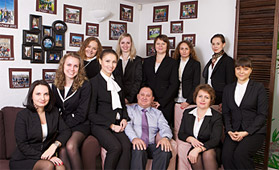
Expert assistance in selecting the right schools for your child in the UK, Switzerland, which have been our main specialization since 1996.
We also help you enter schools where teaching is conducted in English: in the United Arab Emirates, Spain, Austria, Thailand, Canada, and France.
Full support in the admission procedure: preparation for an interview, visits to selected schools accompanied by a Paradise employee.
Assistance in applying to universities in the UK, Switzerland, Canada: writing motivation letters, creating a package of documents, creating the right case for applying for a visa (to avoid rejection).
Leave your phone number, we will call you back soon, answer all your questions and offer an individual program that is suitable for you and your child.