Professional assistance in selecting a program
Leave your phone number, we will call you back soon, answer all your questions and offer an individual program that is suitable for you and your child.


Age: 9-12 years.
Dates, 2026:
5–11 July, 12–18 July, 19–25 July, 26 July–1 August, 2–8 August.
Oxford Summer Courses were founded in 2010 by two Oxford University graduates who understood the importance of education in developing critical thinking. The aim of the course is to help young people discover and develop their own ideas in inspiring settings, free from the pressures of exams and compulsory curricula.
The aim of the courses is to help children better understand where they want to go in the future and gain a greater sense of independence to begin that journey. Each course is divided into age groups to provide age-appropriate teaching, led by experienced teachers. Each course is carefully designed to inspire, engage and ignite a passion for learning.
Studying at Oxford Summer Courses is an exciting academic journey, specially designed for junior students aged 9-12. Junior courses develop critical thinking, independence and active participation in society.
The course takes place at the famous British school Harrow School. This is one of the most famous and oldest British boarding schools, located in the London borough of Harrow, 30 minutes from Heathrow Airport. Famous graduates include: 8 Prime Ministers of Great Britain, including Winston Churchill, several dozen politicians and members of parliament, writers, screenwriters, members of royal families, 19 holders of the highest military award Victoria Cross and many other famous people of their time.
Summer courses offer 8 exciting programs:
The school is set in 130 hectares of stunning surroundings and boasts excellent sporting facilities including a fully equipped modern sports hall with a range of exercise machines, a 25m swimming pool, 6 winter sports pitches, 4 badminton courts, sports pitches, cricket pitches, an athletics track, 12 all-season tennis courts, a climbing wall, a nine-hole golf course and a fishing lake.
The Art and Design department comprises six large studio spaces with specialist areas for painting, printmaking, sculpture, ceramics, stone carving, photography, laser cutting, foundry, welding, engraving, woodworking and 3D printing. Apple Mac computers are available for working on digital projects.
Harrow School of Music has dedicated teaching and practice rooms, and a concert hall for chamber music. The school has two main organs (a three-manual Walker organ in the chapel and a four-manual Harrison organ in the performance room), several grand pianos (including a Steinway D, two Steinway As and a Fazioli) and a harpsichord. There are two recording studios, and for academic teaching, 25 computers and keyboards for music production.
Interactive learning is at the heart of all the programmes. It is designed to engage pupils in practical activities and group projects. Teachers use games, creative exercises and practical demonstrations to help pupils understand new concepts and actively engage in their learning. This approach promotes creativity, problem solving, and teamwork, as well as building self-confidence in a supportive environment. Working in groups helps you learn to work effectively.o communicate, collaborate with others, and think critically.
For example, students can work together to build a model, conduct a science experiment, or create art related to their studies. This makes learning fun and engaging while reinforcing core academic skills like research, analysis, and presentation. By combining academic content with creative problem-solving, children gain a deeper understanding of their subject and the confidence to apply what they learn to new settings.
Great stories don’t just happen. You need to know how to create a character, plot a plot, grab a reader’s attention, and hold their attention page after page. This course teaches children how to create characters. Children will create interactive adventures using comics, explore the role of photography and podcasts in contemporary storytelling and be inspired by their favourite British authors.
The course is a one-week course and introduces a range of creative writing forms including poetry, prose and non-fiction. Children will explore storytelling techniques such as perspective, tension and structure.
Learning Format: The course includes 12 hours of classroom lessons and 4 hours of supervised study. Lessons are designed to be fun and interactive. Students will work on an independent piece of creative writing throughout the course. At the end of the course, they will be able to give a reading of their work.
By the end of the course, students will be able to:
Sample topics for ages 9–11:
Sample topics for 11-12 years:
The course develops key entrepreneurial skills. Children will learn the basics of entrepreneurship, how a supply chain works, how to trade effectively and what allows a brand to stand out in a crowded market. Students will create and present their own products and services and discover the secrets to future growth and success. They will learn how a good business works and experience the boardroom for the first time.
The course is designed to last one week and gives students a fun and interactive introduction to entrepreneurship, problem solving and financial literacy.
Learning Format: The course includes 12 hours of classroom instruction and 4 hours of supervised tutoring. The lessons are interactive and designed to engage children in the learning process, including group discussions and practical problem solving. Lessons will be structured to encourage collaboration and creative thinking.
Sample topics for 9-10 years:
By the end of the course, students will be able to:
Sample topics for 11-12 years:
By the end of the course, students will be able to:
Children will learn how key figures shaped the world, delve into the history of ancient civilizations, explore how societies evolve over time, and examine the impact of revolutionary events. They will investigate historical mysteries, analyze primary sources, and discover the stories that shaped the world as we know it.
This one-week course introduces students to different periods of history. Children will learn about a range of topics - from political, cultural and social shifts in past societies to key events, periods and legacies that have helped shape the way our world looks and functions today. From world wars to natural disasters, revolutions and great feats of humanity and technology.
Students will explore the law and the justice system and debate whether they agree or disagree with its practices. Explore the complex ways in which laws are made using a combination of interactive study groups and independent research. As they progress through the course, children will discover what it's like to be a lawyer and what really happens in a courtroom. Can you tell the right from the wrong? And can you argue your case?
This one-week course enables students to understand key legal concepts and principles through interactive, project-based learning.
Sample Topics:
Learning Format: The course includes 12 hours of lessons and 4 hours of supervised tutoring. Each day consists of three lessons with breaks, beginning with an introduction to key concepts and vocabulary. Sessions two and three involve learning where children work independently or in groups to explore legal topics in greater depth.
By the end of the course, students will be able to:
Children will learn to analyse patterns, solve numerical problems and explore how mathematical problems manifest themselves in everyday life. Delve into the fundamentals of pure and applied mathematics, developing knowledge in areas ranging from geometric mathematics to algebra and statistics. Students will find puzzles that will leave them speechless (but so happy when you find out the answer), brain teasers, and codes that will help them understand this multidimensional subject!
The course is designed for one week and introduces students to mathematics through hands-on learning and the study of patterns, shapes, and problem-solving strategies.
Learning Format: The course includes 12 hours of lessons and 4 hours of supervised classes. Lessons include a combination of group lessons, paired work, and individual assignments. Lessons are designed to be accessible to all levels. Students will be encouraged to make predictions and explore different avenues of inquiry.
Sample topics for ages 9-10:
By the end of the course, students will be able to:
Sample topics for 11-12 years old:
By the end of the course, students will be able to:
Children will take a magical journey through the mysterious human body and find out if they have the ability to become a doctor. The course covers a range of fascinating and educational topics: from how the body heals to what it is like to work and live as a doctor. Through immersive, interactive study groups and independent research, students will learn how to treat and communicate with patients, as well as the advances in science that are pushing the boundaries of modern medicine.
This one-week course focuses on practical life-saving skills such as CPR, first aid, and emergency procedures.
Sample Topics:
Learning Format: The course includes 12 hours of class time and 4 hours of supervised instruction. Lessons are interactive and hands-on, including role-play, group discussions and practical demonstrations. Students will work in teams to solve a variety of medical scenarios, enhancing learning through the application of knowledge to real-world situations.
By the end of the course, students will be able to:
Everything we are and everything around us is made up of cells, genes, atoms and molecules. In this course, kids will learn the universal language of science and apply it to everything from the origins of life to the study of space. It's an exciting (and hands-on) journey into the coolest corners of biology, chemistry, and physics.
The course is a one-week course that introduces students to key scientific concepts through interactive lessons and hands-on experiments.
Learning Format: The course includes 12 hours of lessons and 4 hours of supervised instruction. There's a strong focus on hands-on work and interactive learning. Children will use microscopes to study cells, participate in quadrant experiments to study plant life, and engage in group discussions and scientific investigations.
Sample topics for 9-10 years:
By the end of the course, students will be able to:
Sample topics for 11-12 years old:
By the end of the course, students will be able to:
The course covers the basics of programming and electronics, design or modeling, and more. Children discuss engineering issues and consider many ways to solve problems. Featuresь course - not dry theory, but immersion in the process and learning everything in practice.
The course is designed for one week and is devoted to the basics of programming and electronics using microdevices to teach programming and robotics.
Training format: the course includes 12 hours of lessons and 4 hours of classes under the supervision of a mentor. Lessons are held interactively, combining short introductory lessons with practical exercises in programming and electronics. The course focuses on teamwork, problem solving and critical thinking. Children will actively participate in group discussions, practical exercises and joint projects.
Students will be engaged in programming microcircuits and creating robots, working both independently and in groups to develop their skills. The focus is on hands-on learning with regular checks to support understanding.
Sample topics for 9-10 years:
By the end of the course, students will be able to:
Sample Topics for 11-12 years:
By the end of the course, students will be able to:
Accommodation is provided in the on-site residence. Students live in shared rooms, which helps to foster friendships. Boys and girls live separately. Regular room checks and a heightened focus on safety ensure that students are comfortable and supported during their stay.
Meals are served three times a day: breakfast, lunch and dinner in the school canteen. Packed lunches are provided during excursions.
In addition to classroom activities, courses include creative projects, teamwork and cultural excursions. This combination of academic focus and activities helps children develop self-confidence and a love of learning.
In the evening, children take part in activities organised by the school team. These include: sports, games, art.
The program includes 2 excursions per week. Examples:
08:00 - Breakfast, check-in, room check
09:00 - Lessons (with breaks)
13:00 - Lunch
14:00 - Homework (supervised)
15:00 - Activities
17:00 - Dinner
19:00 - Evening entertainment
20:00 – Socializing and lights out
Excursions are held on Wednesdays and Sundays.
£2,595 per week with accommodation.
£1,995 per week without accommodation.
Course booking is free.
Included in the price
Additional payment


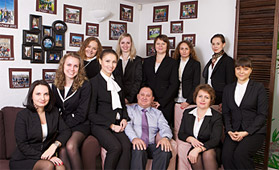
Expert assistance in selecting the right schools for your child in the UK, Switzerland, which have been our main specialization since 1996.
We also help you enter schools where teaching is conducted in English: in the United Arab Emirates, Spain, Austria, Thailand, Canada, and France.
Full support in the admission procedure: preparation for an interview, visits to selected schools accompanied by a Paradise employee.
Assistance in applying to universities in the UK, Switzerland, Canada: writing motivation letters, creating a package of documents, creating the right case for applying for a visa (to avoid rejection).
Leave your phone number, we will call you back soon, answer all your questions and offer an individual program that is suitable for you and your child.